
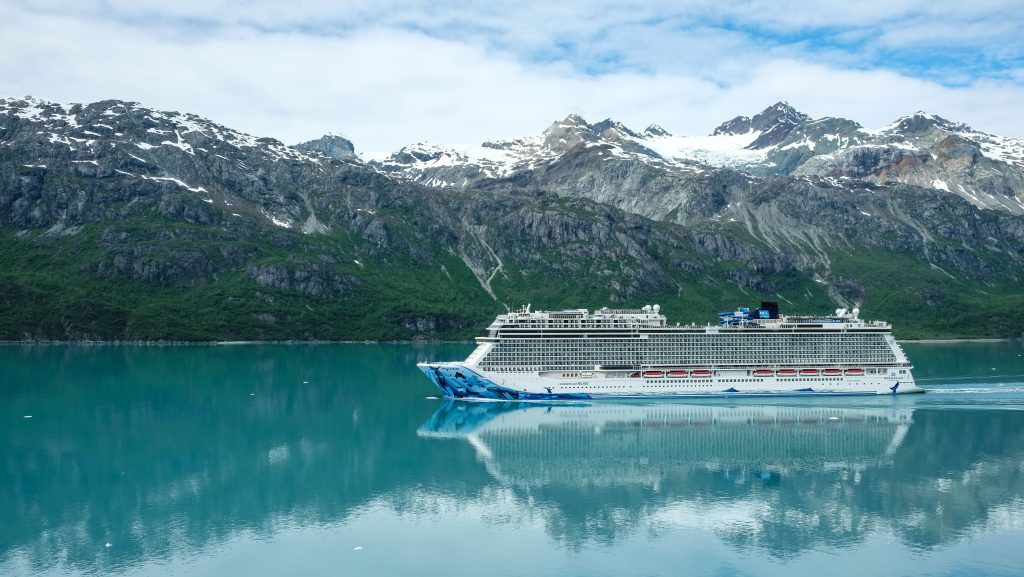
An Alaska cruise is defined less by its ports than by the stretches between them. Long hours of fjords, forest and ice make up much of the trip. Here’s an honest look at what passes your rail, what depends on luck, and what the brochures tend to overpromise.
The Two Main Routes for Alaska Cruises
Most Alaska cruises follow one of two itineraries. The Inside Passage roundtrip sails from Seattle or Vancouver for 7 nights, visiting Southeast Alaska ports and one glacier day. Seattle sailings must stop in a foreign port, usually Victoria, British Columbia.
The Gulf of Alaska one way runs from Vancouver to Seward or Whittier (or the reverse). This route covers the Inside Passage plus Hubbard Glacier or College Fjord, and it’s the easiest way to add Denali on land if you want to extend your trip.
The Glaciers You’ll See on Alaska Cruises
Glacier Bay National Park covers about 3.3 million acres and has seven active tidewater glaciers. The National Park Service lets only two cruise ships enter per day in summer, so only certain lines and sailings hold permits. If Glacier Bay matters to you, confirm it’s on the itinerary before you book. Park rangers typically board for the day and narrate from the ship.
Margerie Glacier is the usual highlight: about 200 feet tall above the water, nearly a mile wide and 21 miles long. About 250 years ago, a single glacier filled the whole bay. Since then the ice has pulled back roughly 60 miles, so the bay you sail through is newly exposed land, geologically speaking.
Hubbard Glacier, on Gulf of Alaska routes, is the longest tidewater glacier in North America. It flows about 76 miles from its source, and its face is around 6 to 7 miles wide and about 350 feet tall. Unlike most Alaska glaciers, Hubbard is advancing rather than retreating.
Tracy Arm and Endicott Arm are narrow fjords lined with sheer granite walls and waterfalls, ending at the Sawyer and Dawes Glaciers. Floating ice often keeps large ships from reaching the glacier face. The fjord itself is still spectacular, but the glacier may be a distant view.
Calving: What You Might See
You may see ice break off the glacier face, but there’s no guarantee. Ships keep their distance for safety, so even a huge piece of ice can look smaller than you expect. Pieces the size of a house often fall with a delayed crack you hear a few seconds after you see it.
The Ports: What Each One Offers
Juneau is Alaska’s capital, with no road connection to the rest of the state. Mendenhall Glacier is about 13 miles long and 20 minutes from the dock. Whale watching here has some of the best sighting rates in Alaska.
Skagway is a Klondike Gold Rush town. The White Pass & Yukon Route railway, completed in 1900, climbs nearly 2,900 feet in about 20 miles to the Canadian border. It’s a popular excursion.
Ketchikan is known for totem poles, Creek Street, and salmon streams. It’s also one of the wettest towns in the United States, with roughly 150 inches of rain a year, so bring a rain jacket.
Sitka was the capital of Russian America until the 1867 sale to the United States. You’ll find a Russian Orthodox cathedral, Tlingit history, and Sitka National Historical Park.
Icy Strait Point, near Hoonah, is owned by a Native corporation. It’s quieter than other ports, with good whale watching and one of the world’s longest ziplines.
Wildlife You’re Likely to See
Humpback whales are very likely on a whale watching tour during their summer feeding grounds near Juneau and Icy Strait. Bald eagles are almost certain to appear everywhere, especially in Ketchikan and Juneau. Sea otters and harbor seals are likely near Glacier Bay and ice floes.
Orcas are possible but not reliable; you might spot them by chance on the Inside Passage. Bears are possible on a dedicated excursion at salmon streams from mid July through September, but rarely seen from the ship. Mountain goats are possible with binoculars on the cliffs in Tracy Arm and Glacier Bay.
Bring binoculars. Much of Alaska’s wildlife is too far away to see well without them.
What You Probably Won’t See
Northern lights almost never appear on summer sailings. Juneau gets about 18 hours of daylight in late June, and the sky doesn’t get dark enough. Late August and September sailings have a small chance.
Denali’s summit is often hidden by clouds if you add a land tour. Only about one in three visitors sees the peak. Count on guaranteed sunshine? Southeast Alaska is a temperate rainforest. Summer highs are usually in the 50s and 60s degrees Fahrenheit, and rain is normal.
When to Go: Month by Month
May brings the lowest fares, more snow on the peaks, drier weather, and fewer crowds. June offers the longest days and peak whale activity. July is the warmest weather, when salmon runs begin, but it’s also the busiest and priciest month.
August brings bears to the salmon streams, though there’s more rain. September offers fall color, quieter ports, a small chance of northern lights, and end of season deals.
Advisor Tips for Alaska Cruises
Book a balcony for the scenic cruising days. The view is the main event. Pick the itinerary before the ship. Glacier Bay versus Tracy Arm versus Hubbard matters more than the cruise line.
Book key excursions early. Floatplanes, bear viewing and helicopter glacier landings sell out and depend on the weather. Pack layers, not bulk. A waterproof shell, a fleece and a warm hat cover almost everything.
Ship deployments and Glacier Bay permits change each season, so check the specific sailing before you commit. If you’re comparing cruise lines for Alaska, our guide to which cruise line suits you best walks through the differences. For more on planning a cruise, see what to expect from a Galveston cruise travel agency.
Let’s talk through which Alaska sailing and itinerary fits your timeline and budget. Reach out to one of our advisors to start planning.