
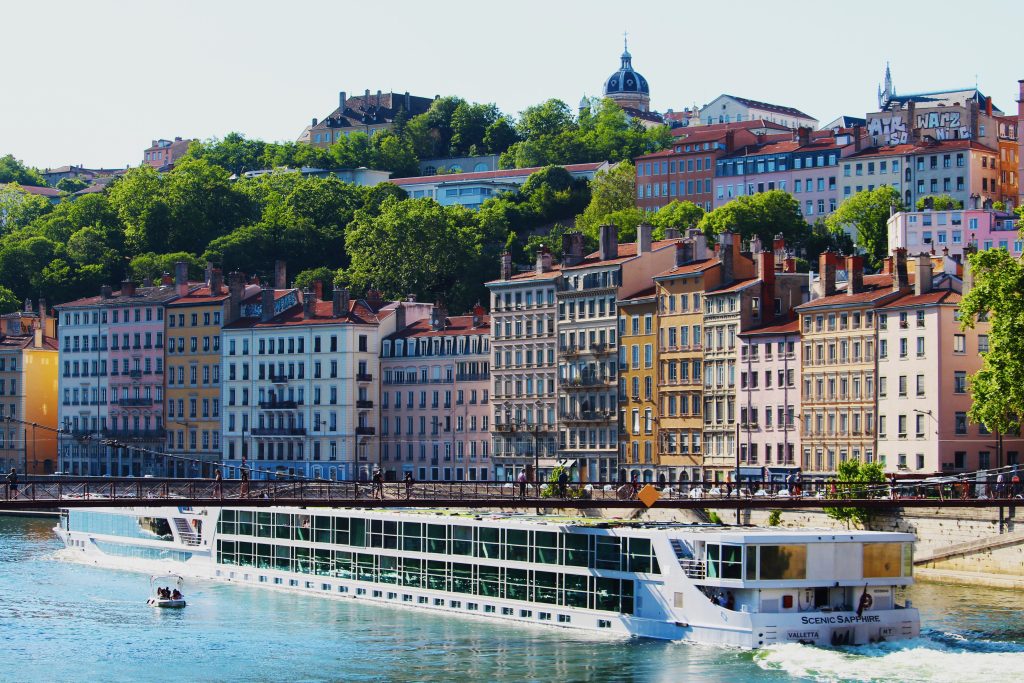

River cruising in Europe is a very different kind of trip from an ocean cruise. There are no casinos, no water slides, and no sea days. Instead you wake up docked in a new town most mornings, often within walking distance of the cathedral and the market square.
Here is what first-timers should actually know before booking.
Why River Cruising in Europe Suits First-Timers
River ships are small, usually carrying 100 to 190 guests, because locks and low bridges limit their size. They tie up along the riverbank, close to the historic center, rather than at an industrial port. Most days include a guided walking tour, and evenings are quiet: a lecture, local music, or a drink in the lounge rather than a big production show. Rivers are calm, so seasickness is rarely a concern.
The Main Rivers
The Danube runs through Germany, Austria, Slovakia, and Hungary, with stops like Passau, Melk, Vienna, Bratislava, and Budapest. It is the most popular first choice, and arriving in Budapest at night, with the Parliament building lit up, is one of the better moments in river travel.
The Rhine flows from Switzerland through Germany and France to the Netherlands, often sailed between Basel and Amsterdam, known for castles and the Rhine Gorge. The Main and Moselle are Rhine tributaries, passing Würzburg, Bamberg, and steep vineyard villages, and often appear on longer combined itineraries.
The Seine connects Paris to Normandy, usually including Monet’s gardens at Giverny and the D-Day beaches. The Rhône and Saône run through Provence and Burgundy, good for food and wine lovers. The Douro in Portugal winds through terraced vineyards near Porto, on smaller ships, with hot summers.
When to Go
- Spring (late March–May): tulip season in the Netherlands, mild weather.
- Summer (June–August): warmest weather, longest days, biggest crowds.
- Fall (September–October): grape harvest, comfortable temperatures.
- Winter (late November–December): Christmas market cruises on the Rhine and Danube. Cold, but festive.
What’s Usually Included
Fares vary by line, but many cover all meals, wine and beer with lunch and dinner, guided excursions in most ports, Wi-Fi, and port charges. Gratuities, premium excursions, and spa services are usually extra, though some luxury lines include more.
Choosing a Cabin
A French balcony is a floor-to-ceiling sliding door with a railing but no outdoor space. A full balcony gives you room to sit outside, a bigger upgrade on a river ship than on an ocean one. Lower-deck cabins often have fixed windows near the waterline, affordable since you’ll spend most of the day ashore anyway.
Things First-Timers Don’t Expect
Ships sometimes dock side by side in busy ports, so you may walk through another ship to reach shore. Under low bridges, railings and the wheelhouse lower, and the sun deck closes. There’s a lot of cobblestone walking, and the crowd skews toward adults over 50; some lines don’t allow children at all.
Water levels can also change plans. Low water on the Rhine or Danube in late summer, or high water after heavy rain, can push lines to reroute, swap ships, or add motorcoach transfers. This happened again in 2026, when a stretch of unusually low water on the Rhine and Danube affected a large share of sailings across the industry. Cancellations were rare, but it’s a real feature of river cruising, not a one-off. It’s part of why travel insurance is worth a look before you go, and our guide on choosing travel insurance walks through what to check for.
Entry Requirements Are Changing Too
Europe’s new Entry/Exit System, a digital biometric check replacing manual passport stamps, is now fully in place across the Schengen Area. A separate pre-travel authorization called ETIAS has been delayed repeatedly and was still not required as of late 2026. Check the U.S. State Department site before you fly, and see our post on what’s actually required to visit Europe for the current state of things.
Who Runs These Cruises
Viking, AmaWaterways, Avalon, Uniworld, Scenic, Tauck, and Riviera Travel are the best-known names, each with its own ship design, inclusions, and dining style. A newer name is entering the picture: Celebrity Cruises is launching its first European river ships in 2027, starting on the Danube and expanding to the Rhine, with plans to grow the fleet significantly by the end of the decade. More competition generally means more choice on price and style, which is good news for first-timers.
Tips for Your First River Cruise
- Add two or three nights before or after in a city like Budapest, Prague, Amsterdam, or Paris.
- Pack comfortable walking shoes and layers.
- Book flights carefully, since many sailings start in one city and end in another.
- Read the excursion list closely; active versus leisurely options change the whole trip.
- Ask early about Christmas market sailings. They book up fast.
If you’re weighing which river, which line, and which cabin fits how you actually like to travel, that’s exactly the kind of planning a travel advisor sorts out in one conversation. Reach out to Point Me To Paradise Travel and we’ll help you map out your first river cruise.