

European cruise ports and seasons vary so much by region that “a European cruise” barely means one trip. Sunlit Greek islands, Norwegian fjords, Baltic capitals, and a week hopping Spain and Italy are four completely different vacations, and the region you pick decides the season, the pace, and what you’ll actually see from the rail.
How European Cruise Ports and Seasons Shape Your Trip
Every region has its own rhythm. Some are built for long, busy port days in famous cities. Others are slower, scenery-driven, or only sail a few months a year. Matching the region to what you actually want from the trip matters more than the cruise line you choose.
The Western Mediterranean
Typical ports: Barcelona, Marseille, Monaco, Livorno (for Florence and Pisa), Civitavecchia (for Rome), Naples (for Pompeii and the Amalfi Coast), and Palma de Mallorca.
This region packs in art, food, wine, and several of Europe’s most famous cities in a single week. The trade-off is that several “city” ports sit well outside the city. Civitavecchia is about 1.5 hours from Rome, and Livorno is about 1.5 hours from Florence. Choose excursions carefully on those days and build in buffer time to get back to the ship.
The Eastern Mediterranean and Greek Isles
Typical ports: Piraeus (for Athens), Santorini, Mykonos, Rhodes, Crete, Kotor, Dubrovnik, Split, and Kuşadası (for Ephesus).
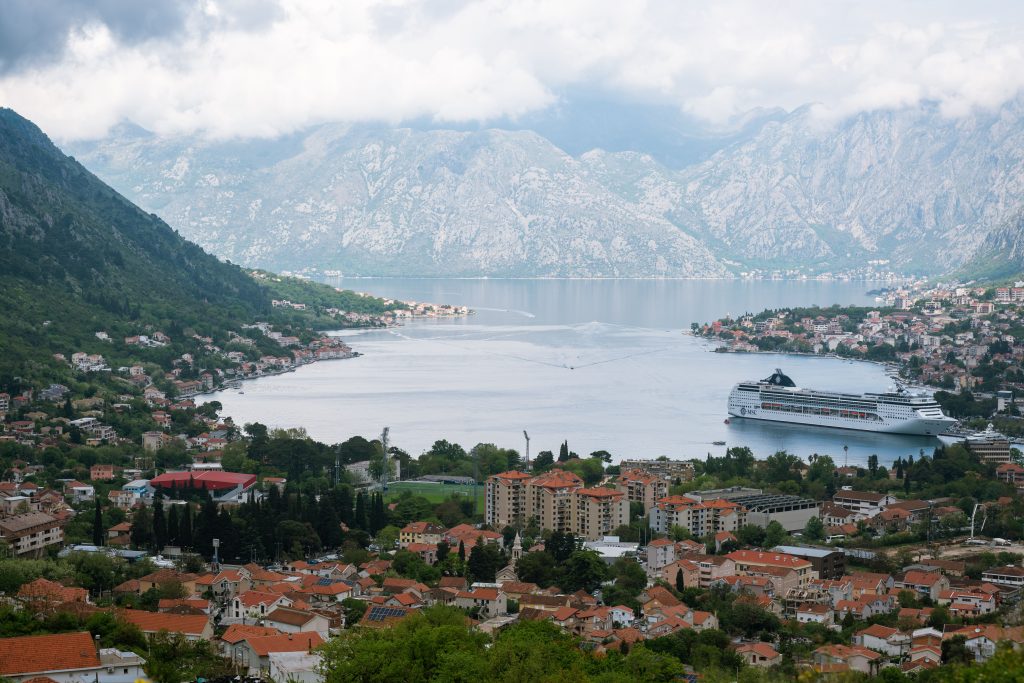
Expect whitewashed villages, ancient ruins, and slower island days. Santorini is a tender port, so ships anchor in the caldera and small boats ferry passengers ashore; on busy days, lines for the tender and cable car add up fast. Kotor and Dubrovnik get crowded when several ships are in port, so an early start helps. One thing to watch: large ships no longer stop in central Venice, so read any itinerary marketed as “Venice” closely. If Athens is on your list, our guide to visiting Athens covers what’s worth the time ashore.
Northern Europe and the Baltic
Typical ports: Copenhagen, Stockholm, Helsinki, Tallinn, Oslo, Warnemünde (for Berlin), Gdańsk, and Riga.
This is grand capitals, palaces, design, and cooler weather. St. Petersburg has not been on itineraries since Russian ports were dropped in 2022; lines replaced it with more time in Scandinavia and the Baltic states. Berlin from Warnemünde is a full day, roughly three hours each way, so it’s worth knowing before you book that excursion.
Norway and the Fjords
Typical ports: Bergen, Geiranger, Flåm, Ålesund, Stavanger, and on longer sailings, the Arctic Circle.
Here the sailing itself is the main event: waterfalls, steep mountains, and small towns tucked between them. Summer brings very long daylight, and above the Arctic Circle around midsummer, the sun doesn’t set at all.
The British Isles
Typical ports: Southampton (for London), Dublin, Belfast, Edinburgh, Liverpool, Cork, and the Orkney Islands.
Castles, whisky, and no language barrier. Southampton is about two hours from central London, and some stops are tender ports, where weather can cause a missed call.
Iceland and Greenland
Typical ports: Reykjavik, Akureyri, Isafjordur, and on some sailings, the Faroe Islands and Greenland. This is the more adventurous European cruise, built around volcanic landscapes, glaciers, and very small towns rather than big cities.
When to Go
In the Mediterranean, April and May bring mild weather and fewer crowds, June through August is hottest and busiest, and September to October is warm with calmer ports; many travelers call it the best window. Some ships sail the Western Mediterranean year round, with lower fares in winter but reduced hours at some attractions.
For Northern Europe, Norway, the British Isles, and Iceland, the season runs May to September. June and July have the longest days and highest fares; May and September are quieter and cooler, with a greater chance of rain.
Tips for Your European Cruise
- Fly in at least a day early. The ship won’t wait for a delayed flight, and two or three nights in Barcelona, Rome, or Athens makes a strong start.
- Expect busy port days. Europe is port-intensive with few sea days, so plan in some rest.
- Pack comfortable shoes; cobblestones, hills, and ruins are everywhere.
- Check where the port really is. “Rome” and “Florence” stops are hours from the cities themselves.
- Check entry requirements before you go. The EU is rolling out new border systems for visitors, including an online travel authorization expected in late 2026 or 2027. Rules shift, so confirm close to your travel date, and start with travel.state.gov for the current official guidance. Our own rundown on the new requirement to visit Europe breaks down what’s known so far.
Choosing Your Region
If this is your first European cruise and you want a bucket list of famous cities, start Western Mediterranean. For islands, beaches, and ancient history, look at the Greek Isles. For capitals and cooler weather, pick Northern Europe and the Baltic. For scenery first, it’s Norway. For castles with no language barrier, it’s the British Isles. For something different altogether, Iceland and Greenland deliver.
Not sure which country fits you best? Our guide to the best country to visit in Europe is a good next stop before you lock in a region.
Talk to one of our advisors and we’ll match the right ports, season, and ship to the trip you actually want.