
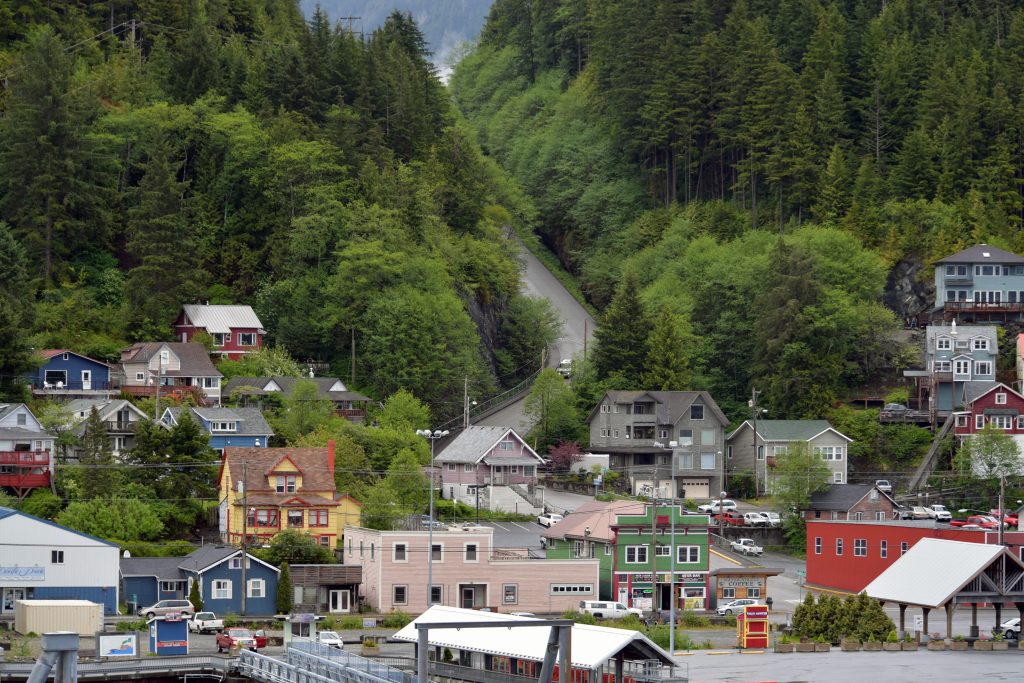
For most cruise passengers, Whittier is a blur: off the ship, onto a bus or train, and through a mountain tunnel toward Anchorage. That’s a shame, because this small port at the head of Prince William Sound is one of the strangest towns in America, and it sits at the edge of some of Alaska’s best glacier country.
Why You’re Stopping at Whittier Alaska Cruise Port
Whittier is one of two main cruise ports serving Anchorage. Seward is the other. Most Gulf of Alaska cruises start or end at one of them. Whittier is the closer of the two—about 60 miles from Anchorage, roughly 90 minutes by car or about 2.5 hours by train. Seward is about 125 miles away, roughly 2.5 to 3 hours by car or about 4 hours by train.
Princess, Holland America, Norwegian and Oceania are among the lines that use Whittier. Each cruise line chooses its port by season, so check your sailing to see which one you’ll use. If you’re booking an Alaska cruise, ask your agent which port your ship uses.
The Tunnel That Controls Everything
The only road into Whittier runs through the Anton Anderson Memorial Tunnel, about 2.5 miles long. It’s the longest combined rail and highway tunnel in North America. One lane, shared by trains and cars. Vehicles drive on the railroad tracks. Traffic alternates direction on a set schedule, with trains taking priority. The tunnel closes overnight.
Miss the last opening and you’re in Whittier until morning. The tunnel opened to cars only in 2000. Before that, the town was reachable only by train or boat. That schedule is why cruise transfers run on fixed times. If you’re driving yourself to the ship, check the tunnel schedule before you leave Anchorage.
A Town Under One Roof
Whittier has about 270 residents, and nearly all of them live in one building. Begich Towers is a 14-story former Army barracks built in the 1950s. It holds apartments, the post office, a small store, a clinic and the police station. The school is connected by an underground tunnel, so children can get to class without going outside in winter.
Nearby stands the Buckner Building, completed in 1953. It was once the largest building in Alaska and was called a “city under one roof.” Today it’s a hollow concrete shell, and you’ll see it as you arrive. It’s a reminder of what happens when a military base closes.
Why It Exists
Whittier was built during World War II as a secret military port. The Army chose the site because mountains, cloud cover and heavy weather made it hard to spot from the air. A railroad spur was finished in 1943, and the port became a main entry point for troops and supplies into Alaska. The military left in the 1960s, and the town was incorporated in 1969.
The Weather and the Earthquake
Whittier is one of the wettest places in North America. It gets about 197 inches of precipitation a year, including about 22 feet of snow in an average year. Low clouds often hide the surrounding mountains completely. Bring a waterproof jacket, even in July.
The 1964 Good Friday earthquake, the most powerful ever recorded in North America, sent a tsunami into Whittier that killed 13 people and destroyed much of the waterfront. That history shaped the town you see today.
If You Have More Than an Hour at the Whittier Alaska Cruise Port
Whittier is the gateway to Prince William Sound, and a day here is one of the best ways to see tidewater glaciers up close. Several options are worth your time.
- Prince William Sound glacier cruise: Several tidewater glaciers in a single day, plus sea otters, harbor seals and seabirds, and sometimes whales or orcas. Smaller day boats can get much closer to the ice than cruise ships.
- College Fjord: A fjord lined with glaciers named after Ivy League and other East Coast colleges. Some cruise itineraries include it as a scenic cruising stop.
- Kayaking: Guided paddles among floating ice near the glaciers.
- Portage Glacier and Portage Valley: Just through the tunnel on the Anchorage side, with a glacier, a visitor center and a wildlife center nearby.
How to Make the Most of Your Time
Add a night before or after your cruise. An extra day lets you take a Prince William Sound glacier cruise, which many travelers count among the highlights of their whole trip. Take the train if you have time. The Alaska Railroad is slower than the bus but far more scenic.
Plan around the tunnel if you’re driving. Build in extra time, because a missed opening can mean a 30-minute or longer wait. Know what to expect from the town. Whittier is tiny and industrial. Its appeal is the history and the setting, not shopping or dining.
If you’re planning an Alaska cruise and want to make the most of your time at the Whittier port, talk to one of our advisors about adding a pre- or post-cruise glacier tour.